Co-designing
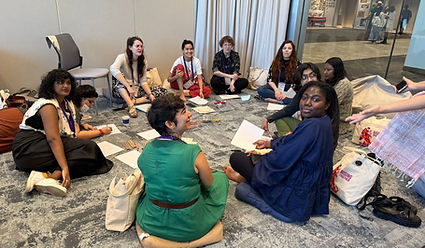
Stitching is our methodology to think and design with communities, not for them. The slow and repetitive process of stitching offers space for self-reflection and has a therapeutic effect on the stitcher. This slowing down allows time for creativity, reflection, and diverse paths of participation. When hands are busy, something else opens up: people share more, listen differently, and find it easier to say difficult things.
Stitching is also culturally specific, historically connected to women and marginalised caste and religious communities in South Asia, which makes it an inviting medium for communities to participate in, and a way to build bridges with communities that other design tools cannot reach. To invite participation through stitching is to invite whole selves into the process bypassing the usual access barriers present in heavily patriarchal settings.
We have had the opportunity to share about stitching as a feminist research and participatory design methodology at Participatory Design Conference, Malaysia 2024, AWID Feminist Forum 2024, Feminist Collective in Architecture’s National Conclave 2025, Coalition of Feminists for Social Change 2025, and more.

Khush Azad Kaabil
An ongoing long-term collaboration with the Azadi Project's Khush Azad Kaabil Women's Centre in Kalindi Kunj, Delhi, using stitching as a sustained intervention for mental health and agency-building with women from Rohingya and other migrant and refugee communities.
.jpeg)

.jpeg)
.jpeg)
Stitching Futures
An open-source toolkit co-designed by our team for those who wish to build solidarities and imagine alternate feminist futures, combining the healing and meditative qualities of stitching with the transformative power of theatre and the values of a historically feminist practice like Kantha. The methodology was shared at the AWID Feminist Forum in 2024.

Rafughar
From its inception in 2023 till 2025, we were part of the core team that co-designed Rafughar, a brave space that uses stitching and textile art as a way to heal from trauma and dream of collective future across social divides (with Compasion Contagion, Yellow Streets, and Art Reach India). Community co-designers came to refer to it as a space of sukoon (peace) similar to their maika (their mother's home). The Love Lihaaf and Umeed ka Karavaan quilts were co-created with the Rafughar community during this time.

Love Lihaaf
Co-created over six months at Rafooghar, Love Lihaaf is a community quilt of interfaith feminist solidarity. Artists spent time with each other and stitched each other's stories into a shared cloth. The idea came from a conversation where community members noticed the similarities between Ramzaan fasting and Navratra vrats. That moment of recognition became the heart of the quilt: what friendship and understanding can build across faith.
Umeed Ka Karavaan
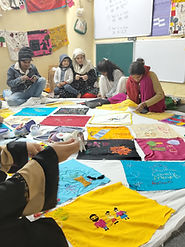
A physical and digital quilt that reached beyond Rafughar, where folks from across India and Malaysia gifted their hopes and dreams to each other through stitching workshops. Folks across ages, gender, religious, and caste identities found space to share and co-create - each hope manifested into cloth by another participant as an act of care. Read more here.